
Word games have surged in popularity, captivating players with their blend of mental challenge and entertainment. Among the many daily word games available, two stand out: Wordle and Contexto. While both fall under the umbrella of word games, they offer distinctly different experiences.
This article explores the nuances of each, highlighting their unique mechanics and challenges. Let’s dive in and discover the key differences between these two engaging puzzles.
Overview of Word Games
Introduction to Word Games
Word games have entertained and challenged people for generations. These games range from classic crossword puzzles to modern digital challenges, all revolving around the manipulation and understanding of words. The appeal of a word game lies in its ability to stimulate the mind, enhance vocabulary, and provide a sense of accomplishment. Word games offer something for everyone, from casual players to avid word enthusiasts.
The Popularity of Wordle
Wordle, created by Josh Wardle, exploded onto the scene in 2022 and quickly became a daily sensation. Its simple yet engaging format challenges the player to guess a secret word in six tries. The game provides hints after each guess, indicating which letters are correct and in the right position (green) or correct but in the wrong position (yellow). This intuitive feedback loop makes Wordle accessible and addictive, drawing in a wide audience.
The Rise of Contexto
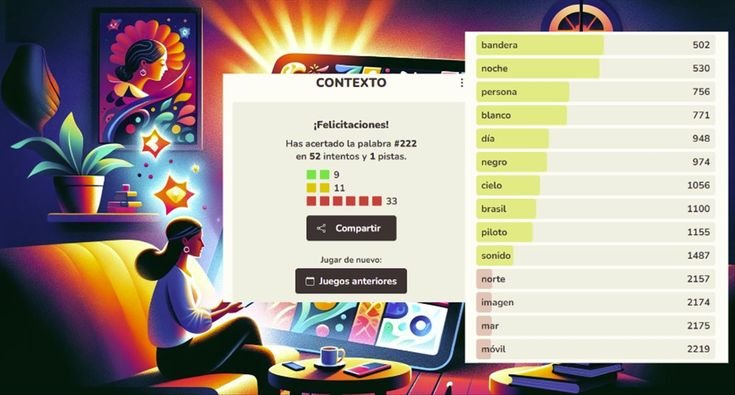
Contexto, unlike Wordle, presents a different kind of challenge, focusing on semantic similarity rather than letter matching. Created by a Brazilian developer, Contexto uses an AI algorithm to sort words based on their context. The player’s goal is to find the secret word by entering guesses and receiving numerical scores that indicate how closely each guess relates to the mystery word. The lower the score, the closer the guess. This innovative approach has fueled Contexto’s rise in popularity, offering a unique word game experience.
Understanding Contexto
How to Play Contexto
To play Contexto, the user starts by entering any word as their first guess. The AI, utilizing NLP techniques, analyzes the input and provides a number indicating the similarity between the guessed word and the secret word of the day.
The aim is to find the secret word by making subsequent guesses, using the scores as hints. The player continues to try words, getting closer and closer based on the numerical feedback. This process continues until the player guesses the secret word.
Contexto Game Mechanics
The game mechanics of Contexto revolve around an AI algorithm that measures the semantic similarity between words. The AI uses context to relate words, sorting them based on how closely they are related to the secret word.
This is different from Wordle, where the focus is on letter placement. The closer a guess is in meaning to the secret word, the lower the score. This mechanism allows for unlimited guesses, giving the player ample opportunity to figure out the mystery word.
Scoring and Challenges in Contexto
In Contexto, the score is crucial, serving as the primary hint. The scoring system ranks words based on their similarity to the secret word, with lower numbers indicating closer semantic relationships. The challenge lies in understanding the context and finding words that the AI deems similar.
Unlike Wordle, there are unlimited guesses, but finding the secret word requires understanding subtle semantic nuances. You can even get a half the position tip to give you a head start, but it may impact your score.
For a deeper dive into NLP and semantic similarity, resources like Wikipedia offer comprehensive explanations: Natural Language Processing on Wikipedia.
Exploring Wordle
How Wordle Works
Wordle is a word game that challenges players to guess a secret word in six tries. The game provides color-coded hints after each guess: green indicates a correct letter in the correct position, while yellow signifies a correct letter in the wrong position.
This feedback mechanism helps players narrow down the secret word. The popularity of Wordle lies in its simplicity and the daily challenge it offers, making it a fun way to test vocabulary and deduction skills.
Wordle Game Mechanics and Strategy
The game mechanics of Wordle are straightforward: guess a five-letter word, receive feedback, and refine subsequent guesses based on the hints provided. Effective strategies involve using common letters in the first guess to uncover as many letters as possible.
Players often try to eliminate vowels early on and focus on letter frequency to improve their score and successfully find the secret word within the limited guesses.
Player Experience and Engagement in Wordle
The player experience in Wordle is characterized by daily engagement and a sense of accomplishment upon solving the puzzle.
Many players share their results on social media, fostering a sense of community and friendly competition. The game’s limited daily availability keeps players coming back each day for a fresh challenge, contributing to its sustained popularity. The fun and simple design add to the engaging experience.
Comparative Analysis: Contexto vs Wordle

Gameplay Differences
Contexto and Wordle offer distinct gameplay experiences. In Wordle, players guess a secret word based on letter matching, receiving feedback on letter accuracy and placement.
In contrast, Contexto, created by a brazilian developer, challenges players to find the secret word by semantic similarity, with an AI providing numerical scores indicating how similar each guess is to the target word. Players try using the number to find the closest. This makes Contexto more about understanding context than letter arrangement.
Scoring Systems Compared
Wordle’s scoring system is binary: a letter is either correct and in the right spot (green), correct but in the wrong spot (yellow), or incorrect. The goal is to guess the secret word in as few attempts as possible.
Contexto, on the other hand, uses a numerical score that reflects the semantic similarity between the guessed word and the secret word. The lower the number, the closer the guess is to the secret word of the day. This provides a more nuanced hint than Wordle’s system.
Player Preferences and Community Feedback
The popularity of both Wordle and Contexto indicates a broad appeal, but player preferences often depend on individual strengths and interests. Wordle attracts those who enjoy letter-based puzzles and a daily challenge with a definitive solution.
Contexto, with its AI-driven semantic analysis, appeals to players who enjoy language-based challenges and exploring words like their meanings. Some players appreciate Contexto’s unlimited guesses, while others prefer Wordle’s limited attempts.
Tips for Mastering Both Games
Strategies for Winning in Contexto
To excel in the Contexto game, players should try to think broadly about the context of words like their meanings and associations. A good first guess might be a common word to establish a baseline.
Then, try to guess words that relate to the first guess, paying close attention to the score. The lower the number you receive, the closer you are to the secret word. Using NLP techniques helps to find the secret word.
Wordle Tips and Tricks
For Wordle, strategic guessing is key to find the secret word. Start with a first guess that uses common vowels and consonants to uncover as many letters as possible.
Analyze the resulting hints (green and yellow tiles) to refine your subsequent guesses. Focus on letter placement and consider common word patterns. With only six guesses, each one counts, so make sure to play smart!
Finding Fun in Both Challenges
The fun in both Contexto and Wordle lies in their unique mental challenges. Wordle provides a daily dose of vocabulary and deductive reasoning, while Contexto encourages players to explore the semantic relationships between words.
Some enjoy the puzzle aspect and others are inspired by the closest guess. Embrace the daily challenge, experiment with different strategies, and enjoy the satisfaction of cracking the secret word.
Conclusion: Choosing Your Word Game
Final Thoughts on Contexto and Wordle
Contexto and Wordle both stand out in the crowded field of word games, offering distinct experiences that cater to different preferences.
Wordle’s letter-matching challenge provides a quick and satisfying daily puzzle, while Contexto’s semantic similarity game offers a more open-ended and exploratory challenge created by a Brazilian developer. Both games are fun additions to any word enthusiast’s repertoire.
Which Game Suits You?
Deciding which game suits you depends on your preferred type of mental challenge. If you enjoy quick, deductive puzzles with clear-cut rules, Wordle might be your first guess.
On the other hand, if you prefer exploring language and semantic relationships with unlimited guesses, Contexto offers a more immersive experience. Why not try both and see which one captivates you more?
External Resources for Further Exploration
To deepen your understanding of NLP and semantic similarity, explore resources like Google AI Language. For more on Wordle strategies, various game sites and forums offer insights and tips from experienced players. These resources can help you refine your skills and enhance your enjoyment of both Contexto and Wordle. Google AI Language.
FAQS
What’s the goal of Contexto?
Contexto is a word puzzle where players guess a secret word by entering semantically similar words. An AI gives a score showing how close each guess is—the lower the score, the nearer to the secret word—encouraging players to think creatively about language and context.
Can you only play Contexto once a day?
Contexto lets players enjoy unlimited daily games with unlimited guesses, allowing them to refine strategies and play at their own pace, unlike Wordle’s single daily challenge.
What’s the best startingord for Contexto?
In Contexto, there’s no single best first guess. A good strategy is to start with common, broad words like “hello” or “language” to gain an initial score and context, helping the AI narrow down the secret word.
What is a Contexto game?
To play Contexto, guess words and get a score indicating closeness to the secret word—the lower the score, the closer. Use scores as hints and try different words. If stuck, use the half-position tip.
How Do You Play Contexto?
To play Contexto, enter a word and the AI gives a score showing how close it is to the secret word—the lower the score, the closer the guess. Keep trying different words using the scores as hints. If stuck, use the half-position tip.
For more information on how AI models similarity between words, check out resources like Google AI’s research on language models: Google AI Natural Language Processing.